


Change Font Size: Decrease Increase

Home

NRTRC Telemedicine Conference 2014

 Save the date for the NRTRC Telemedicine Conference 2014 in Portland, OR March 24-26th.


 For more information on the conference go to our conference website by clicking here.


Northwest Regional Telehealth Resource Center

front page image
The NRTRC provides technical assistance in developing telehealth networks and applications to serve rural and underserved communities.
Purpose:
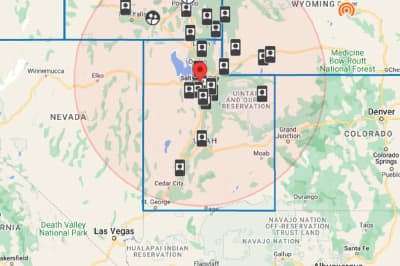
The NRTRC leverages the collective expertise of 33 telehealth networks in Alaska, Idaho, Montana, Oregon, Utah, Washington, and Wyoming to share information and resources and develop new telehealth programs.
NRTRC Services:
  • Provide technical assistance for new programs and applications
  • Increase exposure to telehealth as a healthcare delivery tool
  • Improve access to specialty care through regional collaboration
  • Develop information on best practices and telehealth toolkits
  • Provide information and facilitate discussion of regional regulatory, policy, and reimbursement issue

Follow us:  

News & Information 

Telemedicine offers convenience, savings as it expands in Montana (posted 6/19/13)

For more than a decade, telemedicine services have been available to Montana patients and providers thanks to a growing network of fiber-optic lines, IP addresses and, perhaps most essentially, increased trust and enthusiasm in a system that turns traditional health care on its head.

A bill passed in the last legislative session that requires private insurance companies to cover telemedicine services may increase the number of people using telemedicine and expand its services, the bill’s supporters say.

Senate Bill 270, sponsored by Sen. Edward Buttrey, R-Great Falls, was signed into law in April.

Medicare and Medicaid had been covering the service, and Indian Health Services and the VA offer telemedicine services to its patients as well.

Click here to read the full article


University of Washington Seeks Study Participants (posted: 5/13/13)

The University of Washington is conducting a telehealth study addressing the impact of UW TelePain Case Conferences on pain management in rural and underserved communities and is seeking participants for the study.  The purpose of the study is to examine provider-level and patient-level outcomes of a telehealth-enhanced symptom management intervention.  For more information on what is required and who to contact please refer to the the study announcement by clicking here.


Videoconferencing in Schools: A Remote Possibility (Posted 5/8/13)

      The school in the remote town of Assin Foso, Ghana, might be the last place you’d expect to find a videoconferencing system—for one, there’s no broadband service—but there it is. The story of how it got there is worth reading for any technology manager faced with projects such as setting up a videoconferencing system on short notice because a science teacher landed a virtual interview with an astronaut.
      In late 2011, The Hershey Company began work on a distance-learning project to connect the Assin Foso school with students in Hershey, PA. The company asked its videoconferencing vendor, Cisco, to help facilitate the virtual classrooms at both ends.

In Ghana, the challenges included:

To read the full article click here.


Fewer doctors more cameras to spur teledermatology (Posted 5/7/13)

     Medical peripherals can combine with a smartphone to create the function of an ultrasound machine, an EKG reader, or an otoscope, to name just a few diagnostic devices. But without buying anything extra, nearly every consumer mobile device has a camera of some sort built-in. That means that when it comes to dermatology, most patients have, right in their pockets, the tools to gather much of the data their doctor needs to treat them.

     Teledermatology was a major topic at the American Telemedicine Association conference in Austin, Texas, in particular the “store and forward” kind, which is teledermatology where patients take pictures and send them to their dermatologist, who sends a treatment plan back — rather than conducting the examination in realtime. Just as the country is experiencing a dermatologist shortage, sufficiently high quality cameras are becoming widespread enough to support remote skin care.

Click here to read the full article. 


Pediatric Care Benefiting from the Advantages of Telemedicine (posted: 5/6/13)

      As they move out of pilot initiatives and into implementations, telemedicine projects are taking a star role in pediatric care models across the country, a seemingly natural fit for extending the reach of scarce subspecialists beyond the four walls of their offices.

      Telemedicine care works the same -- mostly -- for pediatric patients as it does for adults -- save for a slightly different approach to "looking into a little kid's ears" as opposed to a grown-up's, said Dr. Neil Herendeen, associate professor in the University of Rochester's department of pediatrics.

      Herendeen is the medical director at Health-E-Access, a Rochester, N.Y.-based telemedicine program that provides videoconference doctor "visits" with children, who link directly from their schools or daycare centers. Using such examination tools as digital stethoscopes and high-definition cameras, physicians and nurse practitioners at Golisano Children's Hospital connect with on-site telemedicine assistants to diagnose and treat routine childhood illnesses, as well as to communicate their findings and recommendations.


Click here to read the full article.


Special Edition of News & Views Newsletter (Posted: 4/22/13)

A special edition of the NRTRC's News & Views Newsletter has just been posted to our website.  It is a wrap-up of our Telemedicine Conference we held in March and an announcement of next year's conference location.

Check it out by going to our newsletter page.


New Blog Post: Montana Passes New Telemedicine Parity Law (Posted: 4/18/13)

Since the late 90’s, out-of-state physicians are able to procure a telemedicine license from the State of Montana. However until recently there were no other laws on the books for telemedicine.  That changed on April 5th when Governor Steve Bullock signed SB 270 into law.  Montana is one of four states to sign new telemedicine legislation in the last month and is only the 2nd state in the Northwest region to pass a parity law (Oregon passed theirs in 2009).  There are now nineteen states with telemedicine parity laws and ten other states reviewing proposed legislation.

Click here to read the full post

Mass General Launches Telehealth Pilot (Posted 4-9-13)

Officials at Massachusetts General Hospital announced Monday the launch of a new telehealth pilot aimed at bringing healthcare services to psychiatry and neurology patients statewide through real-time video visits.

The six-month pilot slated to go live this month will focus primarily on child/adolescent psychiatry, heart failure and neurology patients, officials say.  The 907-bed hospital based in Boston will tap American Well for the telehealth technology platform.

The Web-based platform is designed to extend the ability of physicians to improve care from the patients' home or work using the Internet, smartphones or tablet devices. 

To read the full article click here.


The Key to Making Telemedicine Work (Posted 4-8-13)

No longer languishing on the fringes of the industry, telemedicine is well on its way to becoming a fundamental component of mainstream healthcare delivery.  According to the American Telemedicine Association (ATA), approximately 200 telemedicine networks have been established nationwide, and more than 50 percent of U.S. hospitals use at least one telemedicine service.

Subsidies from the public and private sector are beginning to make it financially feasible for rural hospitals and practices to deploy telemedicine technology.  The legal and administrative barriers to adoption are also slowly faling.  Seven states and the District of Columbia have introduced  bills that address telemedicine converage and reimbursement.  These recent developments are encouraging and strongly suggest that telemedicine is here to stay.

To read the full article click here.


To see older posts go here.

Our Region

Upcoming Events

line

NRTRC Events Calendar

Network Profiles

Northwest TeleHealth

     Serving the medical community in eastern Washington since 1996, Northwest TeleHealth offers member sites a robust video conference network comprised of more than 160 units connecting healthcare facilities across eastern Washington. Northwest TeleHealth provides a collaborative environment for administrative, educational, and clinical activities to improve access to services, care coordination and health education to benefit patients and providers within our region. Clinical services include patient consults for wound care, behavioral health, diabetes, cardiology, and physical therapy. By bridging the distance for better patient care, and providing a cost effective and convenient model for healthcare delivery, Northwest TeleHealth is a mutually beneficial system to all who access its programs and services.

Website:  www.nwtelehealth.org

line

Recent Updates


NRTRC RSS

Click here to subscribe to this feed.

The Ehealth, Telehealth and Telemedicine Blog

Click here to subscribe to this feed.

Telecare Aware Latest

Click here to subscribe to this feed.

mobihealthnews

Click here to subscribe to this feed.


Apple improves Siri’s suicide prevention safeguard

On the iOS 6 and iOS 7 versions of Siri, the digital assistant software has been updated so that it will offer to call the National Suicide Prevention Lifeline, instead of simply showing the nearest locations of suicide prevention centers like older versions of Siri did, according to Huffington Post. If the user chooses “no,” [...]

Pokitdok raises $1.5M for health price comparisons

PokitDok, a California-based healthcare price transparency service, has raised $1.5 million in its first round of funding, according to SEC documents. The company previously raised $1.3 million in seed funding in June 2012, and another $200,000 in December, bringing their total funding after this raise to $3 million. Seattle entrepreneur and angel investor Jonathan Sposato mentioned in [...]


Federal Telemedicine News

Click here to subscribe to this feed.


To Our Readers: New Web Site

We have a new website at www.federaltelemedicine.com. The new site was designed to make it easier to find information that interests you and to share it on Twitter, Facebook, and LinkedIn.

The present news coverage will continue with an emphasis on federal and state information including DOD and the Veterans Administration, news from Capitol Hill, university research activities, announcements from foundations, non-profits, plus information on selected RFPs and grants.

I will continue to attend and report on selected briefings, meetings, and conferences but there will also be more emphasis on news from industry as it relates to telemedicine, telehealth, and health technology. Richard Bloch an established technology writer located in Northern California will be the blog’s new HIT industry correspondent. His email is rjb@rbloch.com.  

You can go directly to the site at www.federaltelemedicine.news to see the most recent postings. For example, recent postings include news on NIH, Veterans Administration, bills in Utah and New York, and much more…

You can also click the RSS feed where the posts will immediately appear and if you subscribe to the RSS feed, then the information will come directly to your cell phone. If you already subscribe to Federal Telemedicine News through Constant Contact, you will receive a short capsule of information on the new postings as they become available.

Postings will appear at least twice a week or more if there is a need. To keep up with the latest news go to www.federaltelemedicine.com . If you have any questions or would like to send information or ideas, email cb@cbloch.com.


VA Committed to Innovation

The Department of Veterans Affairs launched the VA Center for Innovation (VACI) to build onto the VA Innovation Initiative (VAi2). VACI (www.innovation.va.gov) announced thirteen new awards from its industry innovation competition that focus on teleaudiology, prosthetic socket redesign, Blue Button, and the sterilization automating process for reusable medical instruments.

An awardee the University of Michigan (U-M) Kidney Epidemiology and Cost Center will use the $3.7 million to create a National Kidney Disease Registry to monitor kidney disease among veterans. The Registry is expected to help the VA to care for the more than 10,000 veterans on dialysis with an additional 3,200 veterans estimated to reach kidney failure each year. 

The University of Michigan nephrologist Rajiv Saran, MD, Associate Director of the U-M Kidney Center is the Principal Investigator. She will collaborate with biostatisticians, along with organ transplant and health policy specialists on the project.

Other awards were given to:

  • RemotEAR by Otovation of King of Prussia, PA—to improve audiology services by providing a solution for assessing all audiology services through rehabilitation
  • Technical Feasibility of Smartphone Based Teleaudiology by Phonak of Warrenville, Il—to enable remote programming of hearing aids through a smartphone
  • Remote Audiometry in VA CBOCs, by Audiology, Inc., of Arden Hills MN—to develop an automated audiometer to support personnel in VA facilities
  • Cochlear Implant Programming by Cochlear Americas of Centennial CO—to develop remote programming for cochlear implants
  • Quasi-Passive Prosthetic Socket Technology by MIT—to improve socket fit by using a permanent socket that allows for adjustments to stiffness and reduces the socket movement by using continuous electronic sensors and laminate technology
  • Pro-Active Dynamic Accommodating Prosthetic Socket by Infoscitex of Waltham MA—to create a prosthetic socket with sensors to conform to volume changes as well as changes caused by the gait cycle
  • Socket Optimized for Comfort with Advanced Technology by Florida State University of Tallahassee, FL—to develop a prosthetic socket to better manage changes in volume and pressure and provide active cooling and temperature control
  • Synergetic Improvements for Transfermoral Prosthetic Sockets, by the Ohio Willow Wood Company of Mt. Sterling OH—to create an improved transfermoral suspension and socket system made from polymer materials
  • VA Mobile Blue Button by Agilex Technologies of Chantilly, VA—to allow patients to view and share their VA health data using their mobile devices
  • Blue Button Authentication Field Test Proposal, by Northrop Grumman—to enable veterans to authenticate online to access their medical records
  • Blue Button Extensions Medical Imaging by Ray Group International of Washington D.C.—to enable veterans to view and download their own medical images and  transmit the images to their non-VA physicians
  • Automated Integrated Perioperative Process by GE Global Research of Niskayuna, N.Y—to help the VA develop a fully automated process for sterilizing reusable medical instruments